Scientific Journal "Sociology: Theory, Methods and Marketing"
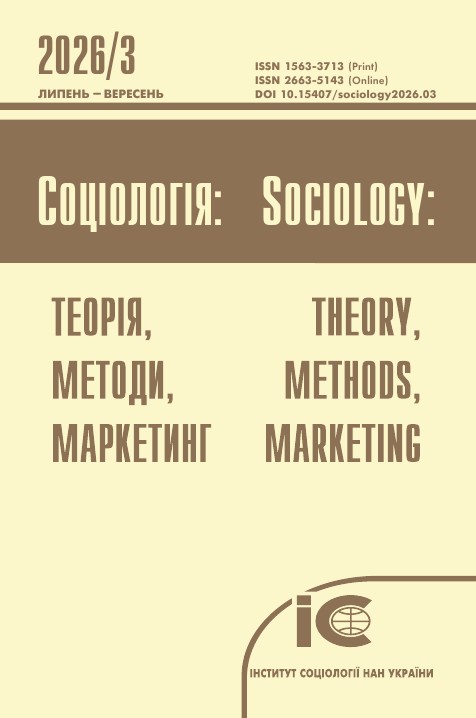
LATEST PRINTED ISSUE
LATEST FREELY ACCESSIBLE MATERIALS
Peer Review Process
1. The Editorial board makes a decision on paper publication after completing the peer review procedure.
2. Correspondence of the papers with the scientific specialization of the journal shall be determined by the Editor in Chief who appoints for each article two (sometimes three) reviewers among leading Ukrainian or foreign experts in the field.
3. The double-blind review is practiced: reviewers are unaware of the identity of the authors, and authors are also unaware of the identity of reviewers. There are at least ten or more reviewers for the total number of articles in each issue.
4. Within two days the Editor in chief assistants inform the author of the paper acceptance for consideration. Editor in chief personally sends the article to reviewers and gets them to text reviews.
4.1 Duration of review – up to two months.
4.2. A review examines the following:
- originality and scientific novelty of article;
- correct citation;
- correspondence between the paper content and the title;
- consideration of the latest publications in the area of study, covered by the paper.
- final decision on whether the paper is accepted for publication, needs follow-up revision or rejected.
- description of the shortcomings in the paper which, being not subject to scientific discussion, should be corrected by the authors.
Editor in chief makes a list of reviewers’ remarks and sends it to the author.
ditor in chief has the right to add their own comments to the expert remarks.
4.3. The revised paper shall be submitted for consideration of the previous experts. Reconsideration of the paper lasts up to two months.
4.4. Editor in Chief never disclose the names of reviewers.
4.5. If all reviewers' conclusions are positive/negative, it is usually the main reason for making the article for publication / rejection. But the Editorial board, in some cases, have the right to disagree with the decision of the reviewers, if will be good reason for this.
4.6. If the evaluation of the reviewers on some articles diverging, the Editorial board takes a special decision: accepted / reject those articles or assign new reviewers.
4.7. If an article is rejected, the Editor in chief assistants inform the author via e-mail of the reasons for the refusal.
2. Correspondence of the papers with the scientific specialization of the journal shall be determined by the Editor in Chief who appoints for each article two (sometimes three) reviewers among leading Ukrainian or foreign experts in the field.
3. The double-blind review is practiced: reviewers are unaware of the identity of the authors, and authors are also unaware of the identity of reviewers. There are at least ten or more reviewers for the total number of articles in each issue.
4. Within two days the Editor in chief assistants inform the author of the paper acceptance for consideration. Editor in chief personally sends the article to reviewers and gets them to text reviews.
4.1 Duration of review – up to two months.
4.2. A review examines the following:
- originality and scientific novelty of article;
- correct citation;
- correspondence between the paper content and the title;
- consideration of the latest publications in the area of study, covered by the paper.
- final decision on whether the paper is accepted for publication, needs follow-up revision or rejected.
- description of the shortcomings in the paper which, being not subject to scientific discussion, should be corrected by the authors.
Editor in chief makes a list of reviewers’ remarks and sends it to the author.
ditor in chief has the right to add their own comments to the expert remarks.
4.3. The revised paper shall be submitted for consideration of the previous experts. Reconsideration of the paper lasts up to two months.
4.4. Editor in Chief never disclose the names of reviewers.
4.5. If all reviewers' conclusions are positive/negative, it is usually the main reason for making the article for publication / rejection. But the Editorial board, in some cases, have the right to disagree with the decision of the reviewers, if will be good reason for this.
4.6. If the evaluation of the reviewers on some articles diverging, the Editorial board takes a special decision: accepted / reject those articles or assign new reviewers.
4.7. If an article is rejected, the Editor in chief assistants inform the author via e-mail of the reasons for the refusal.
Peer Review Process
1. The Editorial board makes a decision on paper publication after completing the peer review procedure.
2. Correspondence of the papers with the scientific specialization of the journal shall be determined by the Editor in Chief who appoints for each article two (sometimes three) reviewers among leading Ukrainian or foreign experts in the field.
3. The double-blind review is practiced: reviewers are unaware of the identity of the authors, and authors are also unaware of the identity of reviewers. There are at least ten or more reviewers for the total number of articles in each issue.
4. Within two days the Editor in chief assistants inform the author of the paper acceptance for consideration. Editor in chief personally sends the article to reviewers and gets them to text reviews.
4.1 Duration of review – up to two months.
4.2. A review examines the following:
- originality and scientific novelty of article;
- correct citation;
- correspondence between the paper content and the title;
- consideration of the latest publications in the area of study, covered by the paper.
- final decision on whether the paper is accepted for publication, needs follow-up revision or rejected.
- description of the shortcomings in the paper which, being not subject to scientific discussion, should be corrected by the authors.
Editor in chief makes a list of reviewers’ remarks and sends it to the author.
ditor in chief has the right to add their own comments to the expert remarks.
4.3. The revised paper shall be submitted for consideration of the previous experts. Reconsideration of the paper lasts up to two months.
4.4. Editor in Chief never disclose the names of reviewers.
4.5. If all reviewers' conclusions are positive/negative, it is usually the main reason for making the article for publication / rejection. But the Editorial board, in some cases, have the right to disagree with the decision of the reviewers, if will be good reason for this.
4.6. If the evaluation of the reviewers on some articles diverging, the Editorial board takes a special decision: accepted / reject those articles or assign new reviewers.
4.7. If an article is rejected, the Editor in chief assistants inform the author via e-mail of the reasons for the refusal.
2. Correspondence of the papers with the scientific specialization of the journal shall be determined by the Editor in Chief who appoints for each article two (sometimes three) reviewers among leading Ukrainian or foreign experts in the field.
3. The double-blind review is practiced: reviewers are unaware of the identity of the authors, and authors are also unaware of the identity of reviewers. There are at least ten or more reviewers for the total number of articles in each issue.
4. Within two days the Editor in chief assistants inform the author of the paper acceptance for consideration. Editor in chief personally sends the article to reviewers and gets them to text reviews.
4.1 Duration of review – up to two months.
4.2. A review examines the following:
- originality and scientific novelty of article;
- correct citation;
- correspondence between the paper content and the title;
- consideration of the latest publications in the area of study, covered by the paper.
- final decision on whether the paper is accepted for publication, needs follow-up revision or rejected.
- description of the shortcomings in the paper which, being not subject to scientific discussion, should be corrected by the authors.
Editor in chief makes a list of reviewers’ remarks and sends it to the author.
ditor in chief has the right to add their own comments to the expert remarks.
4.3. The revised paper shall be submitted for consideration of the previous experts. Reconsideration of the paper lasts up to two months.
4.4. Editor in Chief never disclose the names of reviewers.
4.5. If all reviewers' conclusions are positive/negative, it is usually the main reason for making the article for publication / rejection. But the Editorial board, in some cases, have the right to disagree with the decision of the reviewers, if will be good reason for this.
4.6. If the evaluation of the reviewers on some articles diverging, the Editorial board takes a special decision: accepted / reject those articles or assign new reviewers.
4.7. If an article is rejected, the Editor in chief assistants inform the author via e-mail of the reasons for the refusal.
LATEST PRINTED ISSUE
LATEST FREELY ACCESSIBLE MATERIALS