Scientific Journal "Sociology: Theory, Methods and Marketing"
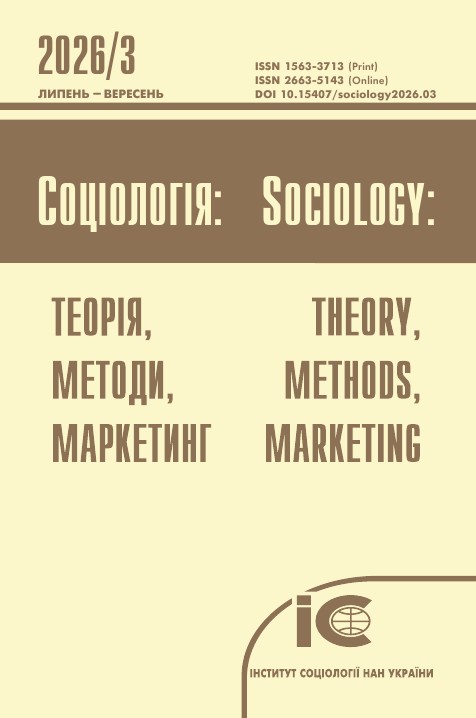
LATEST PRINTED ISSUE
LATEST FREELY ACCESSIBLE MATERIALS
Retraction Policy
The journal follows internationally accepted standards of publication ethics and applies retraction procedures when a published article contains serious violations of research integrity or significant errors that invalidate the results or conclusions of the study.
Retraction is intended to correct the scholarly record and inform readers about unreliable or problematic publications.
Grounds for Retraction
An article may be retracted in the following cases:
The decision to retract an article is made by the editorial office after conducting an appropriate investigation. The procedure may include:
Retraction Notice
In the case of retraction, the journal publishes an official retraction notice that:
Retraction is intended to correct the scholarly record and inform readers about unreliable or problematic publications.
Grounds for Retraction
An article may be retracted in the following cases:
- plagiarism or self-plagiarism;
- data fabrication or falsification;
- major errors in research results or conclusions;
- duplicate publication;
- unethical research practices;
- serious authorship violations;
- other breaches of publication ethics.
The decision to retract an article is made by the editorial office after conducting an appropriate investigation. The procedure may include:
- notification from authors, readers, or reviewers regarding potential violations;
- review of the case by the editorial office;
- requesting explanations from the authors;
- consultation with experts or members of the editorial board.
Retraction Notice
In the case of retraction, the journal publishes an official retraction notice that:
- clearly identifies the retracted article;
- explains the reasons for the retraction;
- includes a reference to the original article.
Retraction Policy
The journal follows internationally accepted standards of publication ethics and applies retraction procedures when a published article contains serious violations of research integrity or significant errors that invalidate the results or conclusions of the study.
Retraction is intended to correct the scholarly record and inform readers about unreliable or problematic publications.
Grounds for Retraction
An article may be retracted in the following cases:
The decision to retract an article is made by the editorial office after conducting an appropriate investigation. The procedure may include:
Retraction Notice
In the case of retraction, the journal publishes an official retraction notice that:
Retraction is intended to correct the scholarly record and inform readers about unreliable or problematic publications.
Grounds for Retraction
An article may be retracted in the following cases:
- plagiarism or self-plagiarism;
- data fabrication or falsification;
- major errors in research results or conclusions;
- duplicate publication;
- unethical research practices;
- serious authorship violations;
- other breaches of publication ethics.
The decision to retract an article is made by the editorial office after conducting an appropriate investigation. The procedure may include:
- notification from authors, readers, or reviewers regarding potential violations;
- review of the case by the editorial office;
- requesting explanations from the authors;
- consultation with experts or members of the editorial board.
Retraction Notice
In the case of retraction, the journal publishes an official retraction notice that:
- clearly identifies the retracted article;
- explains the reasons for the retraction;
- includes a reference to the original article.
LATEST PRINTED ISSUE
LATEST FREELY ACCESSIBLE MATERIALS