Scientific Journal "Sociology: Theory, Methods and Marketing"
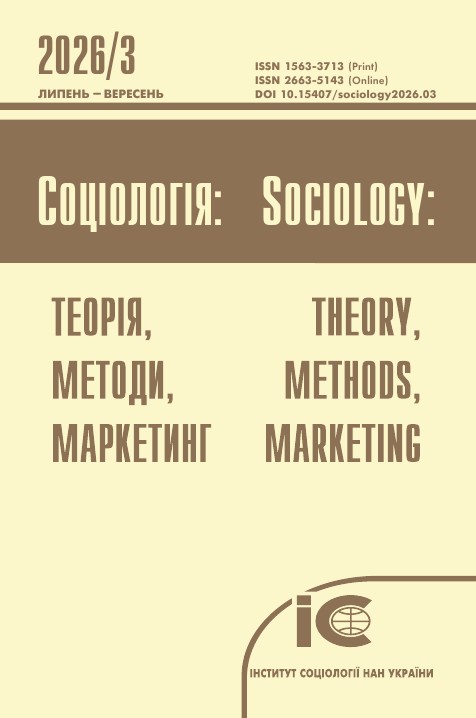
LATEST PRINTED ISSUE
LATEST FREELY ACCESSIBLE MATERIALS
Conflict of Interest Disclosure
The journal adheres to the principles of transparency and academic integrity in the preparation, peer review, and publication of scholarly articles. Authors, reviewers, and members of the editorial board are required to disclose any potential or actual conflicts of interest that could influence the objectivity of the research, the peer review process, or editorial decisions.
A conflict of interest may arise from financial, professional, personal, or institutional relationships that could affect the research results or their interpretation.
Authors must disclose any potential conflicts of interest at the time of manuscript submission. If such conflicts exist, they should be clearly indicated in the manuscript (for example, in a “Conflict of Interest” or “Acknowledgements” section).
Reviewers should decline to review a manuscript if they have any potential conflicts of interest, such as professional or personal relationships with the authors, joint projects, or competitive interests.
Members of the editorial board must not participate in editorial decisions regarding manuscripts in which they have a personal or professional interest.
The Editor-in-Chief, members of the Editorial Board, and editorial staff are allowed to submit manuscripts to the journal. To avoid conflicts of interest, such manuscripts are handled by an independent editor. Editors who are authors or co-authors of a manuscript are excluded from any editorial decisions regarding their own submissions, including selection of reviewers, management of the peer-review process, final publication decision. Such manuscripts undergo the standard peer-review process involving independent reviewers.
The editorial office aims to ensure a transparent and unbiased peer review and decision-making process in accordance with internationally recognized standards of publication ethics.
A conflict of interest may arise from financial, professional, personal, or institutional relationships that could affect the research results or their interpretation.
Authors must disclose any potential conflicts of interest at the time of manuscript submission. If such conflicts exist, they should be clearly indicated in the manuscript (for example, in a “Conflict of Interest” or “Acknowledgements” section).
Reviewers should decline to review a manuscript if they have any potential conflicts of interest, such as professional or personal relationships with the authors, joint projects, or competitive interests.
Members of the editorial board must not participate in editorial decisions regarding manuscripts in which they have a personal or professional interest.
The Editor-in-Chief, members of the Editorial Board, and editorial staff are allowed to submit manuscripts to the journal. To avoid conflicts of interest, such manuscripts are handled by an independent editor. Editors who are authors or co-authors of a manuscript are excluded from any editorial decisions regarding their own submissions, including selection of reviewers, management of the peer-review process, final publication decision. Such manuscripts undergo the standard peer-review process involving independent reviewers.
The editorial office aims to ensure a transparent and unbiased peer review and decision-making process in accordance with internationally recognized standards of publication ethics.
Conflict of Interest Disclosure
The journal adheres to the principles of transparency and academic integrity in the preparation, peer review, and publication of scholarly articles. Authors, reviewers, and members of the editorial board are required to disclose any potential or actual conflicts of interest that could influence the objectivity of the research, the peer review process, or editorial decisions.
A conflict of interest may arise from financial, professional, personal, or institutional relationships that could affect the research results or their interpretation.
Authors must disclose any potential conflicts of interest at the time of manuscript submission. If such conflicts exist, they should be clearly indicated in the manuscript (for example, in a “Conflict of Interest” or “Acknowledgements” section).
Reviewers should decline to review a manuscript if they have any potential conflicts of interest, such as professional or personal relationships with the authors, joint projects, or competitive interests.
Members of the editorial board must not participate in editorial decisions regarding manuscripts in which they have a personal or professional interest.
The Editor-in-Chief, members of the Editorial Board, and editorial staff are allowed to submit manuscripts to the journal. To avoid conflicts of interest, such manuscripts are handled by an independent editor. Editors who are authors or co-authors of a manuscript are excluded from any editorial decisions regarding their own submissions, including selection of reviewers, management of the peer-review process, final publication decision. Such manuscripts undergo the standard peer-review process involving independent reviewers.
The editorial office aims to ensure a transparent and unbiased peer review and decision-making process in accordance with internationally recognized standards of publication ethics.
A conflict of interest may arise from financial, professional, personal, or institutional relationships that could affect the research results or their interpretation.
Authors must disclose any potential conflicts of interest at the time of manuscript submission. If such conflicts exist, they should be clearly indicated in the manuscript (for example, in a “Conflict of Interest” or “Acknowledgements” section).
Reviewers should decline to review a manuscript if they have any potential conflicts of interest, such as professional or personal relationships with the authors, joint projects, or competitive interests.
Members of the editorial board must not participate in editorial decisions regarding manuscripts in which they have a personal or professional interest.
The Editor-in-Chief, members of the Editorial Board, and editorial staff are allowed to submit manuscripts to the journal. To avoid conflicts of interest, such manuscripts are handled by an independent editor. Editors who are authors or co-authors of a manuscript are excluded from any editorial decisions regarding their own submissions, including selection of reviewers, management of the peer-review process, final publication decision. Such manuscripts undergo the standard peer-review process involving independent reviewers.
The editorial office aims to ensure a transparent and unbiased peer review and decision-making process in accordance with internationally recognized standards of publication ethics.
LATEST PRINTED ISSUE
LATEST FREELY ACCESSIBLE MATERIALS