Scientific Journal "Sociology: Theory, Methods, Marketing"
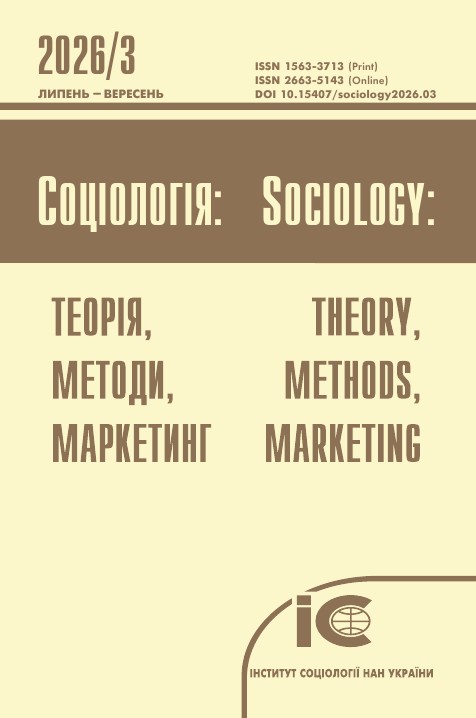
LATEST PRINTED ISSUE
LATEST FREELY ACCESSIBLE MATERIALS
From intentions to decisions: shifts in the return intentions of Ukrainian war migrants
stmm. 2026 (3): 78-95
DOI https://doi.org/10.15407/sociology2026.03.078
Full text: https://stmm.in.ua/archive/ukr/2026-3/7.pdf
KATERYNA KRIZHIK, Postgraduate Student, Department of Social Psychology, Institute of Sociology, National Academy of Sciences of Ukraine (12, Shovkovychna St., Kyiv, 01021)
k.krizhik@gmail.com
https://orcid.org/0000-0003-1961-2202
The article traces the evolution of Ukrainian war migrants’ return intentions over a 2.5-year period through the qualitative longitudinal study. The analytical framework was a matrix of aspirations and capabilities, which allowed us to describe not only the respondents’ positions at a specific point in time but also their shifts between them. In the first wave, most positions were concentrated in the “difficult return” and “undecided” quadrants. By the second wave, three trajectories were identified: (1) exhaustion of the waiting strategy, when the inability to postpone the decision any further pushes one toward staying abroad; (2) accumulation of opportunities for staying, which transforms the very desire to return; (3) stabilization of ambivalence as a stable equilibrium between the two orientations. Also, there are noted isolated cases of return due to realization of one’s own agency. The results allow us to propose three refinements to the matrix. First, the “undecided” quadrant requires an internal distinction: “uncertainty of waiting” (wave 1) and “uncertainty as a stable equilibrium” (wave 2) have different exit mechanisms. Second, the decision is formed simultaneously on two planes—the return matrix (where the decisive conditions are in Ukraine) and the stay matrix (where the decisive conditions are abroad). Third, individual factors directly transform aspirations—the removal of structural constraints does not in itself guarantee return.
Keywords: the Russian-Ukrainian war; war-induced migration; refugees; adaptation; life plans; (non-)return; aspirations and opportunities; social capital; intentions; decisions
References:
-
Ajzen, I. (1991). The theory of planned behavior. Organizational behavior and human decision processes, 50(2), 179-211. https://doi.org/10.1016/0749-5978(91)90020-T
-
Albrecht, C. & Panchenko, T. (2022). Refugee flow from Ukraine: Origins, effects, scales and consequences, 23(04), 8-16.
-
Berlin, I. (1969). Four essays on liberty. Oxford University Press.
-
Braun, V. & Clarke, V. (2006). Using thematic analysis in psychology. Qualitative Research in Psychology, 3(2), 77-101. https://doi.org/10.1191/1478088706qp063oa
-
Carling, J. (2002). Migration in the age of involuntary immobility: Theoretical reflections and Cape Verdean experiences. Journal of Ethnic and Migration Studies, 28(1), 5-42. https://doi.org/10.1080/13691830120103912
-
Carling, J. & Schewel, K. (2018). Revisiting aspiration and ability in international migration. Journal of Ethnic and Migration Studies, 44(6), 945-963. https://doi.org/10.1080/1369183X.2017.1384146
-
Cassarino, J.-P. (2004). Theorising Return Migration: The Conceptual Approach to Return Migrants Revisited. International Journal on Multicultural Societies, 6(2), 253-279.
-
Czaika, M., Bijak, J. & Prike, T. (2021). Migration Decision-Making and Its Key Dimensions. The Annals of the American Academy of Political and Social Science, 697(1), 15-31. https://doi.org/10.1177/00027162211052233
-
Dadush, U. & Weil, P. (2022). Will Ukraine's refugees go home? Bruegel Policy Contribution, 16, 1-13.
-
Haas, H. (2010). Migration and Development: A Theoretical Perspective. International Migration Review, 44(1), 227-264. https://doi.org/10.1111/j.1747-7379.2009.00804.x
-
Haas, H. de & Fokkema, T. (2011). The effects of integration and transnational ties on international return migration intentions. Demographic Research, 25, 755-782. https://doi.org/10.4054/DemRes.2011.25.24
-
Gmelch, G. (1980). Return Migration. Annual Review of Anthropoloty, 9, 135-159. Retrieved from: http://www.jstor.org/stable/2155732 https://doi.org/10.1146/annurev.an.09.100180.001031
-
Griffiths, M., Rogers, A., & Anderson, B. (2013). Migration, Time and Temporalities: Review and Prospect. COMPAS Research Resources Paper. COMPAS. University of Oxford. http://www.compas.ox.ac.uk/fileadmin/files/Publications/Research_Resources/Citizenship/Report_-_Migration_Time_and_Temporalities_FINAL.pdf
-
Kjeøy, I. & Tyldum, G. (2022). Assessing future migration among Ukrainian refugees in Poland and Norway. Fafo. https://www.fafo.no/en/publications/briefs/assessing-future-migration-among-ukrainian-refugees-in-poland-and-norway-2
-
Klabunde, A. & Willekens, F. (2016). Decision-making in agent-based models of migration: State of the art and challenges. European Journal of Population, 32(1), 73-97. https://doi.org/10.1007/s10680-015-9362-0
-
Krizhik, K. (2026). The Problem of the (Non)Return of Ukrainian Military Migrants: A Theoretical Framework for Research. [In Ukrainian]. Sociology: Theory, Methods, Marketing, 1, 38-59. https://doi.org/10.15407/sociology2026.01.044
-
Lewandowski, P. (2025). Occupational downgrading, job tasks, and the return intentions of the Ukrainian refugees in Poland. EconPol Forum, 26(1), 35-37.
-
Razumkov Center. (August 30, 2022). Moods and Assessments of Ukrainian Refugees (July-August 2022). [In Ukrainian]. Retrieved from: https://razumkov.org.ua/napriamky/sotsiologichni-doslidzhennia/nastroi-ta-otsinky-ukrainskykh-bizhentsiv-lypen-serpen-2022p
-
Schütz, A. (1945). The homecomer. American Journal of Sociology, 50(5), 369-376. https://doi.org/10.1086/219654
-
UNHCR. (2022a). Lives on Hold: Intentions and Perspectives of Refugees from Ukraine #2. https://data.unhcr.org/en/documents/details/95767
-
UNHCR. (2022b). Lives on Hold: Profiles and Intentions of Refugees from Ukraine (pp. 1-21). UNHCR. Retrieved from: https://data.unhcr.org/en/documents/details/94176#_ga=2.79556500.1224105726.1660543157-23445068.1660542815
-
UNHCR. (2024). Lives On Hold: Intentions and Perspectives of Refugees, Refugee Returnees and IDPs from Ukraine #6 Summary Findings. ODP, 19 Novemder.
- Van Dalen, H.P. & Henkens, K. (2013). Explaining emigration intentions and behaviour in the Netherlands, 2005-10. Population Studies, 67(2), 225-241. https://doi.org/10.1080/00324728.2012.725135
Received 08.05.2026
Accepted for publication after review 01.07.2026
From intentions to decisions: shifts in the return intentions of Ukrainian war migrants
stmm. 2026 (3): 78-95
DOI https://doi.org/10.15407/sociology2026.03.078
Full text: https://stmm.in.ua/archive/ukr/2026-3/7.pdf
KATERYNA KRIZHIK, Postgraduate Student, Department of Social Psychology, Institute of Sociology, National Academy of Sciences of Ukraine (12, Shovkovychna St., Kyiv, 01021)
k.krizhik@gmail.com
https://orcid.org/0000-0003-1961-2202
The article traces the evolution of Ukrainian war migrants’ return intentions over a 2.5-year period through the qualitative longitudinal study. The analytical framework was a matrix of aspirations and capabilities, which allowed us to describe not only the respondents’ positions at a specific point in time but also their shifts between them. In the first wave, most positions were concentrated in the “difficult return” and “undecided” quadrants. By the second wave, three trajectories were identified: (1) exhaustion of the waiting strategy, when the inability to postpone the decision any further pushes one toward staying abroad; (2) accumulation of opportunities for staying, which transforms the very desire to return; (3) stabilization of ambivalence as a stable equilibrium between the two orientations. Also, there are noted isolated cases of return due to realization of one’s own agency. The results allow us to propose three refinements to the matrix. First, the “undecided” quadrant requires an internal distinction: “uncertainty of waiting” (wave 1) and “uncertainty as a stable equilibrium” (wave 2) have different exit mechanisms. Second, the decision is formed simultaneously on two planes—the return matrix (where the decisive conditions are in Ukraine) and the stay matrix (where the decisive conditions are abroad). Third, individual factors directly transform aspirations—the removal of structural constraints does not in itself guarantee return.
Keywords: the Russian-Ukrainian war; war-induced migration; refugees; adaptation; life plans; (non-)return; aspirations and opportunities; social capital; intentions; decisions
References:
-
Ajzen, I. (1991). The theory of planned behavior. Organizational behavior and human decision processes, 50(2), 179-211. https://doi.org/10.1016/0749-5978(91)90020-T
-
Albrecht, C. & Panchenko, T. (2022). Refugee flow from Ukraine: Origins, effects, scales and consequences, 23(04), 8-16.
-
Berlin, I. (1969). Four essays on liberty. Oxford University Press.
-
Braun, V. & Clarke, V. (2006). Using thematic analysis in psychology. Qualitative Research in Psychology, 3(2), 77-101. https://doi.org/10.1191/1478088706qp063oa
-
Carling, J. (2002). Migration in the age of involuntary immobility: Theoretical reflections and Cape Verdean experiences. Journal of Ethnic and Migration Studies, 28(1), 5-42. https://doi.org/10.1080/13691830120103912
-
Carling, J. & Schewel, K. (2018). Revisiting aspiration and ability in international migration. Journal of Ethnic and Migration Studies, 44(6), 945-963. https://doi.org/10.1080/1369183X.2017.1384146
-
Cassarino, J.-P. (2004). Theorising Return Migration: The Conceptual Approach to Return Migrants Revisited. International Journal on Multicultural Societies, 6(2), 253-279.
-
Czaika, M., Bijak, J. & Prike, T. (2021). Migration Decision-Making and Its Key Dimensions. The Annals of the American Academy of Political and Social Science, 697(1), 15-31. https://doi.org/10.1177/00027162211052233
-
Dadush, U. & Weil, P. (2022). Will Ukraine's refugees go home? Bruegel Policy Contribution, 16, 1-13.
-
Haas, H. (2010). Migration and Development: A Theoretical Perspective. International Migration Review, 44(1), 227-264. https://doi.org/10.1111/j.1747-7379.2009.00804.x
-
Haas, H. de & Fokkema, T. (2011). The effects of integration and transnational ties on international return migration intentions. Demographic Research, 25, 755-782. https://doi.org/10.4054/DemRes.2011.25.24
-
Gmelch, G. (1980). Return Migration. Annual Review of Anthropoloty, 9, 135-159. Retrieved from: http://www.jstor.org/stable/2155732 https://doi.org/10.1146/annurev.an.09.100180.001031
-
Griffiths, M., Rogers, A., & Anderson, B. (2013). Migration, Time and Temporalities: Review and Prospect. COMPAS Research Resources Paper. COMPAS. University of Oxford. http://www.compas.ox.ac.uk/fileadmin/files/Publications/Research_Resources/Citizenship/Report_-_Migration_Time_and_Temporalities_FINAL.pdf
-
Kjeøy, I. & Tyldum, G. (2022). Assessing future migration among Ukrainian refugees in Poland and Norway. Fafo. https://www.fafo.no/en/publications/briefs/assessing-future-migration-among-ukrainian-refugees-in-poland-and-norway-2
-
Klabunde, A. & Willekens, F. (2016). Decision-making in agent-based models of migration: State of the art and challenges. European Journal of Population, 32(1), 73-97. https://doi.org/10.1007/s10680-015-9362-0
-
Krizhik, K. (2026). The Problem of the (Non)Return of Ukrainian Military Migrants: A Theoretical Framework for Research. [In Ukrainian]. Sociology: Theory, Methods, Marketing, 1, 38-59. https://doi.org/10.15407/sociology2026.01.044
-
Lewandowski, P. (2025). Occupational downgrading, job tasks, and the return intentions of the Ukrainian refugees in Poland. EconPol Forum, 26(1), 35-37.
-
Razumkov Center. (August 30, 2022). Moods and Assessments of Ukrainian Refugees (July-August 2022). [In Ukrainian]. Retrieved from: https://razumkov.org.ua/napriamky/sotsiologichni-doslidzhennia/nastroi-ta-otsinky-ukrainskykh-bizhentsiv-lypen-serpen-2022p
-
Schütz, A. (1945). The homecomer. American Journal of Sociology, 50(5), 369-376. https://doi.org/10.1086/219654
-
UNHCR. (2022a). Lives on Hold: Intentions and Perspectives of Refugees from Ukraine #2. https://data.unhcr.org/en/documents/details/95767
-
UNHCR. (2022b). Lives on Hold: Profiles and Intentions of Refugees from Ukraine (pp. 1-21). UNHCR. Retrieved from: https://data.unhcr.org/en/documents/details/94176#_ga=2.79556500.1224105726.1660543157-23445068.1660542815
-
UNHCR. (2024). Lives On Hold: Intentions and Perspectives of Refugees, Refugee Returnees and IDPs from Ukraine #6 Summary Findings. ODP, 19 Novemder.
- Van Dalen, H.P. & Henkens, K. (2013). Explaining emigration intentions and behaviour in the Netherlands, 2005-10. Population Studies, 67(2), 225-241. https://doi.org/10.1080/00324728.2012.725135
Received 08.05.2026
Accepted for publication after review 01.07.2026
LATEST PRINTED ISSUE
LATEST FREELY ACCESSIBLE MATERIALS