Scientific Journal "Sociology: Theory, Methods, Marketing"
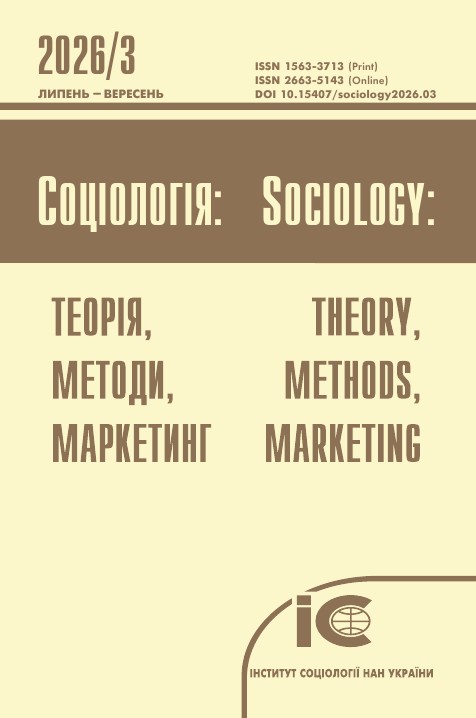
LATEST PRINTED ISSUE
LATEST FREELY ACCESSIBLE MATERIALS
The impact of gender stereotypes on combining motherhood with paid employment in families with preschool age children
stmm. 2026 (3): 65-77
DOI https://doi.org/10.15407/sociology2026.03.065
Full text: https://stmm.in.ua/archive/ukr/2026-3/6.pdf
MARYNA BARDINA, Master of Sociology, Graduate of the Sociology Department, National University of "Kyiv-Mohyla Academy" (2, Hryhorii Skovoroda St., Kyiv, 04070)
marynabardina@gmail.com
https://orcid.org/0009-0003-5324-3428
Gender stereotypes, which are deeply rooted in the domestic and public life of Ukrainian society, still determine the traditional division of family responsibilities. Women are usually assigned the role of caretakers, while men are assigned the role of financial support for the family. As a result, this stereotype confines women within the household, while supporting men in their careers. With the birth of a child, this gap increases and social norms are also reinforced by regulatory documents that for a long time in our country have defined the role of the mother as the priority in caring for a baby up to the age of three. At the same time, public discourse increasingly demonstrates the importance of women's professional employment, and then we see the popularization of one of the behavior models: women with preschool age children try to combine motherhood with paid employment or women postpone the decision to have a baby. The first scenario is quite difficult both physically and mentally for mothers, because social norms still do not require employers to provide comfortable working conditions for women to combine work with motherhood (for example, flexible work schedules, a children's room, etc.), and society is not friendly to the needs of the child. Although it can be assumed that combining motherhood with work is a desirable model for the state, because it speaks both about the economic activity of the population and its reproduction. The second scenario is obviously undesirable for the state, as birth rates are decreasing every year, and demographic forecasts look threatening. Thus, social expectations influence women's decisions to have children and combine care with economic employment. The task of the state today is to understand the needs of such women and promote them at the level of state policy, so as not to lose economically active citizens and support birth rate.
Keywords: gender stereotypes, gender inequality, gender division of labor, egalitarian division of responsibilities, paid and unpaid work, motherhood, fatherhood, preschool age children, demographic indicators
References:
-
Doronina, T.O. (2014). Egalitarianism (egalitarianism, egalitarian consciousness). [In Ukrainian]. In: Encyclopedia of Human Rights: Socio-Pedagogical Aspect (pp. 157-160). Retrieved from: https://elibrary.kdpu.edu.ua/bitstream/123456789/3052/1/Егалітарність.pdf
-
Global Gender Gap Report. (2025). [In Ukrainian]. Retrieved from: https://ccu.gov.ua/sites/default/files/wef_gggr_2025.pdf
-
Hryhorieva, О. (2026). More than 75 thousand women serve in the Armed Forces of Ukraine. [In Ukrainian]. Армія FM, 09/03/2026. Retrieved from: https://www.armyfm.com.ua/ponad--tysiach-zhinok-sluzhat-u-zbroinykh-sylakh-ukrainy--oksana-hryhorieva-radnytsia-henshtabu-zsu/
-
Kysyliova, K.V. (2023). Issues of gender stereotypes in modern society: theoretical and practical aspects. [In Ukrainian]. Scientific Notes. Series: Law, 14, 238-243. Retrieved from: https://pravo.cusu.edu.ua/index.php/pravo/article/view/297/299
-
Labor Code dated 10/12/1971, No. 322-VIII. (1971). [In Ukrainian]. Retrieved from: https://zakon.rada.gov.ua/rada/show/322-08#Text
-
Law of Ukraine "On Amendments to Certain Legislative Acts of Ukraine on Ensuring Equal Opportunities for Mothers and Fathers in Child Care" dated 04/15/2021 No. 1401-IX. (2021). [In Ukrainian]. Retrieved from: https://zakon.rada.gov.ua/rada/show/1401-20#Text
-
Medina, T., Konovalova, T., Korkach, D. (2025). Review study in the context of comprehensive defense. [In Ukrainian]. Retrieved from: https://genderindetail.org.ua/post/dohliadova-pratsia-v-konteksti-vseohopnoi-oborony/
-
Order of the Cabinet of Ministers of Ukraine "The Strategy of the Demographic Development of Ukraine for the period until 2040" dated 30/09/2024 № 922-р. (2024). [In Ukrainian]. Retrieved from: https://zakon.rada.gov.ua/laws/show/922-2024-%D1%80#Text
-
Order of the Ministry of Economy, Environmental Protection and Agriculture of Ukraine від 11/11/2025 No. 1265 "On Approval of the State Standard for Equipping (Arranging) Workstations for Various Types of Functional Impairment". (2025). [In Ukrainian]. Retrieved from: https://zakon.rada.gov.ua/laws/show/z1857-25/print
-
Pavliuk, T.I. (2016). Employment as an economic category: its role in the functioning of a market economy. [In Ukrainian]. Global and National Economic Problems, 14, 26-31.
-
Statistical information on state registration of civil status acts. Information on the results of the work of state registration bodies in 2021-2025. (2021-2025). [In Ukrainian]. Retrieved from: https://minjust.gov.ua/actual-info/stat_info
-
Strelnyk, O. (2017). Care as Work: Motherhood in the Focus of Sociology. [In Ukrainian]. Kyiv: Krytyka.
-
Tsymbal, O., Ostafiychuk, Y., Ohay, M., Yarosh, O., Krymova, M., Krymer, B. (2026). Access to early childhood education and care and economic empowerment of women in Ukraine: a national study. [In Ukrainian]. Retrieved from: https://www.unicef.org/ukraine/reports/access-to-ECE-women-empowerment-Ukraine-study
-
Voloskevych, I., Maksymenko, O. The role of men in fatherhood during a full-scale war. (2023). [In Ukrainian]. Retrieved from: https://ukraine.unfpa.org/sites/default/files/pub-pdf/ukr_rol_cholovikiv_u_batkivstvi_u_chas_povnomasshtabnoi_viyny.pdf
- Voz'nyi, K. (2009). Gender Aspects of Employment: Ukrainian Realities and Global Experience. (2009). In: World Economy and Foreign Economic Activity (pp. 69-80). [In Ukrainian]. Retrieved from: https://api.dspace.wunu.edu.ua/api/core/bitstreams/4bea48b0-01b6-48a6-aeed-ffc5695a6cda/content
Received 10.06.2026
Accepted for publication after review 20.07.2026
The impact of gender stereotypes on combining motherhood with paid employment in families with preschool age children
stmm. 2026 (3): 65-77
DOI https://doi.org/10.15407/sociology2026.03.065
Full text: https://stmm.in.ua/archive/ukr/2026-3/6.pdf
MARYNA BARDINA, Master of Sociology, Graduate of the Sociology Department, National University of "Kyiv-Mohyla Academy" (2, Hryhorii Skovoroda St., Kyiv, 04070)
marynabardina@gmail.com
https://orcid.org/0009-0003-5324-3428
Gender stereotypes, which are deeply rooted in the domestic and public life of Ukrainian society, still determine the traditional division of family responsibilities. Women are usually assigned the role of caretakers, while men are assigned the role of financial support for the family. As a result, this stereotype confines women within the household, while supporting men in their careers. With the birth of a child, this gap increases and social norms are also reinforced by regulatory documents that for a long time in our country have defined the role of the mother as the priority in caring for a baby up to the age of three. At the same time, public discourse increasingly demonstrates the importance of women's professional employment, and then we see the popularization of one of the behavior models: women with preschool age children try to combine motherhood with paid employment or women postpone the decision to have a baby. The first scenario is quite difficult both physically and mentally for mothers, because social norms still do not require employers to provide comfortable working conditions for women to combine work with motherhood (for example, flexible work schedules, a children's room, etc.), and society is not friendly to the needs of the child. Although it can be assumed that combining motherhood with work is a desirable model for the state, because it speaks both about the economic activity of the population and its reproduction. The second scenario is obviously undesirable for the state, as birth rates are decreasing every year, and demographic forecasts look threatening. Thus, social expectations influence women's decisions to have children and combine care with economic employment. The task of the state today is to understand the needs of such women and promote them at the level of state policy, so as not to lose economically active citizens and support birth rate.
Keywords: gender stereotypes, gender inequality, gender division of labor, egalitarian division of responsibilities, paid and unpaid work, motherhood, fatherhood, preschool age children, demographic indicators
References:
-
Doronina, T.O. (2014). Egalitarianism (egalitarianism, egalitarian consciousness). [In Ukrainian]. In: Encyclopedia of Human Rights: Socio-Pedagogical Aspect (pp. 157-160). Retrieved from: https://elibrary.kdpu.edu.ua/bitstream/123456789/3052/1/Егалітарність.pdf
-
Global Gender Gap Report. (2025). [In Ukrainian]. Retrieved from: https://ccu.gov.ua/sites/default/files/wef_gggr_2025.pdf
-
Hryhorieva, О. (2026). More than 75 thousand women serve in the Armed Forces of Ukraine. [In Ukrainian]. Армія FM, 09/03/2026. Retrieved from: https://www.armyfm.com.ua/ponad--tysiach-zhinok-sluzhat-u-zbroinykh-sylakh-ukrainy--oksana-hryhorieva-radnytsia-henshtabu-zsu/
-
Kysyliova, K.V. (2023). Issues of gender stereotypes in modern society: theoretical and practical aspects. [In Ukrainian]. Scientific Notes. Series: Law, 14, 238-243. Retrieved from: https://pravo.cusu.edu.ua/index.php/pravo/article/view/297/299
-
Labor Code dated 10/12/1971, No. 322-VIII. (1971). [In Ukrainian]. Retrieved from: https://zakon.rada.gov.ua/rada/show/322-08#Text
-
Law of Ukraine "On Amendments to Certain Legislative Acts of Ukraine on Ensuring Equal Opportunities for Mothers and Fathers in Child Care" dated 04/15/2021 No. 1401-IX. (2021). [In Ukrainian]. Retrieved from: https://zakon.rada.gov.ua/rada/show/1401-20#Text
-
Medina, T., Konovalova, T., Korkach, D. (2025). Review study in the context of comprehensive defense. [In Ukrainian]. Retrieved from: https://genderindetail.org.ua/post/dohliadova-pratsia-v-konteksti-vseohopnoi-oborony/
-
Order of the Cabinet of Ministers of Ukraine "The Strategy of the Demographic Development of Ukraine for the period until 2040" dated 30/09/2024 № 922-р. (2024). [In Ukrainian]. Retrieved from: https://zakon.rada.gov.ua/laws/show/922-2024-%D1%80#Text
-
Order of the Ministry of Economy, Environmental Protection and Agriculture of Ukraine від 11/11/2025 No. 1265 "On Approval of the State Standard for Equipping (Arranging) Workstations for Various Types of Functional Impairment". (2025). [In Ukrainian]. Retrieved from: https://zakon.rada.gov.ua/laws/show/z1857-25/print
-
Pavliuk, T.I. (2016). Employment as an economic category: its role in the functioning of a market economy. [In Ukrainian]. Global and National Economic Problems, 14, 26-31.
-
Statistical information on state registration of civil status acts. Information on the results of the work of state registration bodies in 2021-2025. (2021-2025). [In Ukrainian]. Retrieved from: https://minjust.gov.ua/actual-info/stat_info
-
Strelnyk, O. (2017). Care as Work: Motherhood in the Focus of Sociology. [In Ukrainian]. Kyiv: Krytyka.
-
Tsymbal, O., Ostafiychuk, Y., Ohay, M., Yarosh, O., Krymova, M., Krymer, B. (2026). Access to early childhood education and care and economic empowerment of women in Ukraine: a national study. [In Ukrainian]. Retrieved from: https://www.unicef.org/ukraine/reports/access-to-ECE-women-empowerment-Ukraine-study
-
Voloskevych, I., Maksymenko, O. The role of men in fatherhood during a full-scale war. (2023). [In Ukrainian]. Retrieved from: https://ukraine.unfpa.org/sites/default/files/pub-pdf/ukr_rol_cholovikiv_u_batkivstvi_u_chas_povnomasshtabnoi_viyny.pdf
- Voz'nyi, K. (2009). Gender Aspects of Employment: Ukrainian Realities and Global Experience. (2009). In: World Economy and Foreign Economic Activity (pp. 69-80). [In Ukrainian]. Retrieved from: https://api.dspace.wunu.edu.ua/api/core/bitstreams/4bea48b0-01b6-48a6-aeed-ffc5695a6cda/content
Received 10.06.2026
Accepted for publication after review 20.07.2026
LATEST PRINTED ISSUE
LATEST FREELY ACCESSIBLE MATERIALS