Scientific Journal "Sociology: Theory, Methods, Marketing"
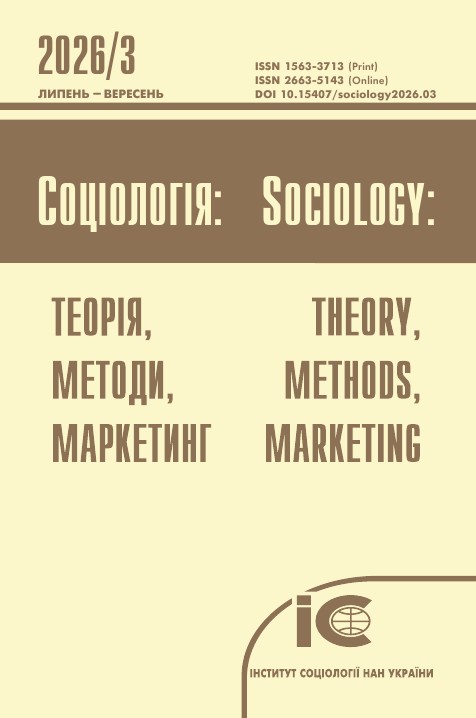
LATEST PRINTED ISSUE
LATEST FREELY ACCESSIBLE MATERIALS
Medical services in a comparative context of contemporary Ukrainian and German cultures
stmm. 2026 (3): 192–204
DOI https://doi.org/10.15407/sociology2026.03.192
Full text: https://stmm.in.ua/archive/ukr/2026-3/13.pdf
TETIANA KAMENSKA, Doctor of Sciences in Sociology, Professor at the Department of Modern Media and Mediadesign, Faculty of Journalism, Odesa I.I. Mechnikov National University (Universytetska Str., 12, Odesa, 65082)
nikadevichya@gmail.com
https://orcid.org/0000-0001-7410-058X
The purpose of the article is to clarify the basis of dissatisfaction expressed by Ukrainian refugees in Germany regarding the perceived “efficiency” and speed of medical treatment.
Within a comparative retrospective analysis, ancient pre-Christian (pagan) healing practices in both countries were examined. The analysis is based on materials from “Germanic Mythology” by Jacob Grimm, as well as ethnographic accounts of traditional Carpathian folk healing practices attributed to molfars.
Significant divergence emerged following the revolutionary events of the early 20th century in the Russian Empire and the formation of the Soviet Union with its dominant atheistic ideology. In the Ukrainian Soviet Republic a comprehensive, population-wide, somatically oriented biomedical system became dominant. As a consequence, a specific cultural attitude toward illness and treatment developed: pain and discomfort are expected to be addressed through effective, fast-acting pharmacological interventions.
In contrast, the transformation of medical paradigms in Germany — from ancient pagan traditions through Christian influence to the present day — did not result in a comparable radical rejection of archetypal interpretations of illness. C. G. Jung left a substantial scientific and clinical legacy emphasizing the importance of psychological wholeness, integration of the individual with nature, overcoming internal and external conflicts, and the preventing the formation of a "shadow" within the psyche. These conceptual frameworks were further developed and popularized in modern German-speaking contexts by proponents of psychosomatic and esoteric medicine, such as Thorwald Dethlefsen and Rüdiger Dahlke in “Disease as a Path”.
Through their interpretative framework, illness can be understood not only as a biological dysfunction but also as a meaningful process reflecting internal psychological conflicts. This approach helps explain the observed time allocation in German medical practice: patients are given time to develop deeper insight into their condition, which also supports diagnostic clarity. Subsequently, therapeutic focus may include guiding individuals toward effective understanding of psychological conflict, as well as avoidance of discomfort.
Keywords: pagan healing traditions; illness archetypes — splitting, internal conflict, shadow; healing
References:
-
Berdnyk, H. (2006). Signs of Carpathian magic. The mystery of the old molfar. [In Ukrainian]. Kyiv: Zelenyi Pes.
-
Giddens, E. (2020). Sociology / Trans. from English. [In Ukrainian]. Kyiv: Library of Ukrainian Textbooks. Retrieved from: https://westudents.com.ua/knigi/567-sotsologya-gdens-enton.html
-
Drach, O.O., Borysenko, N.M. (2018). History of Medicine and Pharmacy (from Ancient Times to the Mid-17th Century): Textbook. [In Ukrainian]. Cherkasy.
-
Kandrychyn, S. (2023). Health beyond the clinical protocol: institutional traps and limitations of modern medicine. [In Ukrainian]. Sociology: Theory, Methods, Marketing, 3, 90-115. https://doi.org/10.15407/sociology2023.03.090
-
The Truth about German Medicine. (2025). Retrieved from: https://www.facebook.com/groups/2486280374918717/posts/4240843869462350/
-
Prokopchuk, D. (2025). How They Treat in Germany: Endless Waiting and "There's Nothing Serious about You". [In Ukrainian]. Retrieved from: https://tsn.ua/blogi/themes/health_sport/yak-likuyut-v-nimechchini-bezkinechni-ochikuvannya-i-u-vas-nichogo-seryoznogo-995435.html
-
Bartsch, K. (1880). Sagen, Märchen und Gebräuche aus Meklenburg (Bd. 2). Wien: Wilhelm Braumüller.
-
Dethlefsen, T., Dahlke, R. (1990). Krankheit als Weg: Deutung und Bedeutung der Krankheitsbilder. München: Goldmann Verlag.
-
Germany life. (2025). Retrieved from: https://www.instagram.com/accounts/login/?next=%2Fp%2FDTiSntNCEF7%2F&source=omni_redirect
-
Grimm, J. (1992). Deutsche Mythologie. Wiesbaden: Drei Lilien Verlag. Retrieved from: http://gutenberg.spiegel.de/buch/deutsche-mythologie-756
-
Jung, C.G. (1970). Аnalytical Psychology, its Theory and Practice: The Tavistock Lectures. New York: Vintage Books a Division of Random House.
- Jung, C.G. (1995). Über die Archetypen des kollektiven Unbewussten. In: Gesammelte Werke, Bd. 9.1, SS. 42-86.
Received 30.04.2026
Accepted for publication after review 22.06.2026
Medical services in a comparative context of contemporary Ukrainian and German cultures
stmm. 2026 (3): 192–204
DOI https://doi.org/10.15407/sociology2026.03.192
Full text: https://stmm.in.ua/archive/ukr/2026-3/13.pdf
TETIANA KAMENSKA, Doctor of Sciences in Sociology, Professor at the Department of Modern Media and Mediadesign, Faculty of Journalism, Odesa I.I. Mechnikov National University (Universytetska Str., 12, Odesa, 65082)
nikadevichya@gmail.com
https://orcid.org/0000-0001-7410-058X
The purpose of the article is to clarify the basis of dissatisfaction expressed by Ukrainian refugees in Germany regarding the perceived “efficiency” and speed of medical treatment.
Within a comparative retrospective analysis, ancient pre-Christian (pagan) healing practices in both countries were examined. The analysis is based on materials from “Germanic Mythology” by Jacob Grimm, as well as ethnographic accounts of traditional Carpathian folk healing practices attributed to molfars.
Significant divergence emerged following the revolutionary events of the early 20th century in the Russian Empire and the formation of the Soviet Union with its dominant atheistic ideology. In the Ukrainian Soviet Republic a comprehensive, population-wide, somatically oriented biomedical system became dominant. As a consequence, a specific cultural attitude toward illness and treatment developed: pain and discomfort are expected to be addressed through effective, fast-acting pharmacological interventions.
In contrast, the transformation of medical paradigms in Germany — from ancient pagan traditions through Christian influence to the present day — did not result in a comparable radical rejection of archetypal interpretations of illness. C. G. Jung left a substantial scientific and clinical legacy emphasizing the importance of psychological wholeness, integration of the individual with nature, overcoming internal and external conflicts, and the preventing the formation of a "shadow" within the psyche. These conceptual frameworks were further developed and popularized in modern German-speaking contexts by proponents of psychosomatic and esoteric medicine, such as Thorwald Dethlefsen and Rüdiger Dahlke in “Disease as a Path”.
Through their interpretative framework, illness can be understood not only as a biological dysfunction but also as a meaningful process reflecting internal psychological conflicts. This approach helps explain the observed time allocation in German medical practice: patients are given time to develop deeper insight into their condition, which also supports diagnostic clarity. Subsequently, therapeutic focus may include guiding individuals toward effective understanding of psychological conflict, as well as avoidance of discomfort.
Keywords: pagan healing traditions; illness archetypes — splitting, internal conflict, shadow; healing
References:
-
Berdnyk, H. (2006). Signs of Carpathian magic. The mystery of the old molfar. [In Ukrainian]. Kyiv: Zelenyi Pes.
-
Giddens, E. (2020). Sociology / Trans. from English. [In Ukrainian]. Kyiv: Library of Ukrainian Textbooks. Retrieved from: https://westudents.com.ua/knigi/567-sotsologya-gdens-enton.html
-
Drach, O.O., Borysenko, N.M. (2018). History of Medicine and Pharmacy (from Ancient Times to the Mid-17th Century): Textbook. [In Ukrainian]. Cherkasy.
-
Kandrychyn, S. (2023). Health beyond the clinical protocol: institutional traps and limitations of modern medicine. [In Ukrainian]. Sociology: Theory, Methods, Marketing, 3, 90-115. https://doi.org/10.15407/sociology2023.03.090
-
The Truth about German Medicine. (2025). Retrieved from: https://www.facebook.com/groups/2486280374918717/posts/4240843869462350/
-
Prokopchuk, D. (2025). How They Treat in Germany: Endless Waiting and "There's Nothing Serious about You". [In Ukrainian]. Retrieved from: https://tsn.ua/blogi/themes/health_sport/yak-likuyut-v-nimechchini-bezkinechni-ochikuvannya-i-u-vas-nichogo-seryoznogo-995435.html
-
Bartsch, K. (1880). Sagen, Märchen und Gebräuche aus Meklenburg (Bd. 2). Wien: Wilhelm Braumüller.
-
Dethlefsen, T., Dahlke, R. (1990). Krankheit als Weg: Deutung und Bedeutung der Krankheitsbilder. München: Goldmann Verlag.
-
Germany life. (2025). Retrieved from: https://www.instagram.com/accounts/login/?next=%2Fp%2FDTiSntNCEF7%2F&source=omni_redirect
-
Grimm, J. (1992). Deutsche Mythologie. Wiesbaden: Drei Lilien Verlag. Retrieved from: http://gutenberg.spiegel.de/buch/deutsche-mythologie-756
-
Jung, C.G. (1970). Аnalytical Psychology, its Theory and Practice: The Tavistock Lectures. New York: Vintage Books a Division of Random House.
- Jung, C.G. (1995). Über die Archetypen des kollektiven Unbewussten. In: Gesammelte Werke, Bd. 9.1, SS. 42-86.
Received 30.04.2026
Accepted for publication after review 22.06.2026
LATEST PRINTED ISSUE
LATEST FREELY ACCESSIBLE MATERIALS